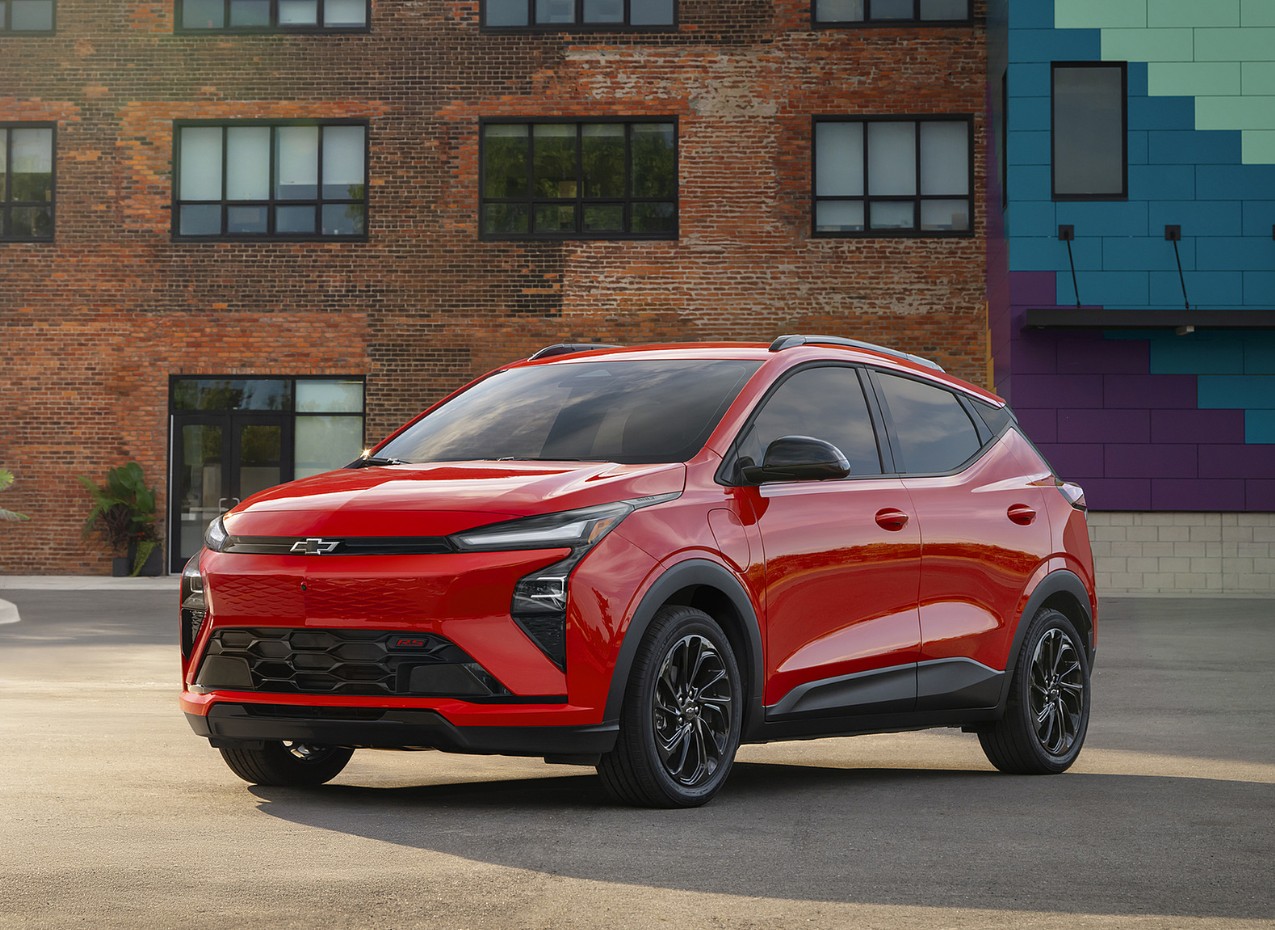
2028 Chevrolet Bolt Review, Specs, Performance – The 2028 Chevrolet Bolt could become one of the most important affordable electric cars in Chevrolet’s lineup, but there is an important distinction between what is confirmed today and what remains a future possibility. Chevrolet has already brought the Bolt back for the 2027 model year after ending production of the previous generation in 2023. The new model carries the familiar compact, tall-hatchback formula while adding a substantially modernized electrical system, faster charging, a native NACS connector, a redesigned cabin and available Super Cruise. Chevrolet currently lists the reborn Bolt with an EPA-estimated 262 miles of range and a starting price of $27,600 before applicable taxes, fees and optional equipment.
For 2028, however, Chevrolet has not announced a specific Bolt model year, redesign or continuation plan. In fact, General Motors originally described the returning 2027 Bolt as a limited-run model, meaning a 2028 continuation should not be treated as confirmed production. That makes the 2028 model particularly interesting for buyers and automotive enthusiasts because its future could depend on demand for inexpensive EVs, Chevrolet’s broader product strategy and how successfully the latest Bolt attracts customers. The current generation has already been engineered around cost efficiency, with GM using shared components and an LFP battery chemistry to maintain a low purchase price without abandoning useful range or modern charging capability.
If Chevrolet decides to continue the nameplate into 2028, the most likely approach would not be an entirely new vehicle. The 2027 Bolt is already a substantial reboot beneath familiar bodywork, and a 2028 version would probably represent a continuation with revised equipment, software improvements, new colors and potentially additional technology. GM’s chief engineer explained that the new Bolt uses the same 65-kWh battery capacity as its predecessor but gains additional range through more efficient electric-drive components. That engineering philosophy is important because it gives Chevrolet room to improve the vehicle without necessarily making it substantially more expensive.
A future 2028 Chevrolet Bolt could therefore remain focused on the qualities that made the nameplate successful: a manageable footprint, useful passenger space, simple electric driving, low operating costs and a price accessible to mainstream buyers. Rather than chasing premium EVs with enormous batteries and six-figure price tags, the Bolt formula is built around efficiency. If Chevrolet continues that philosophy, the 2028 model could receive better software, improved charging performance, updated driver assistance and more sophisticated cabin materials while retaining the 65-kWh-class battery and 210-horsepower front-drive powertrain. Any major change, such as all-wheel drive, a larger battery or a dramatic range increase, remains speculative at this stage. 2028 Chevrolet Bolt Review
2028 Chevrolet Bolt Redesign and Update Plan
Exterior & Interior
The exterior design of a future 2028 Chevrolet Bolt would likely remain compact and practical. The current Bolt measures approximately 169.6 inches in length, giving it a footprint that is easy to maneuver through crowded city streets and tight parking areas. Its relatively tall roofline creates more useful cabin space than the car’s modest exterior dimensions might suggest. Chevrolet has also added new exterior colors and introduced an RS appearance package, allowing the affordable EV to look more expressive without changing its fundamental mechanical layout. A 2028 version could build on this strategy with additional paint choices, revised wheel designs and subtle lighting updates.
The RS trim is particularly significant because it gives the Bolt a sportier personality without turning the car into a performance model. Chevrolet equips the 2027 Bolt RS with unique front grille treatment and RS badging, gloss-black roof rails, 17-inch black wheels, black Evotex seating with red stitching and multicolor ambient lighting. For 2028, Chevrolet could expand that package with darker exterior accents, a more distinctive lower fascia and perhaps an exclusive color. The mechanical hardware could remain unchanged, keeping the RS focused on appearance and cabin atmosphere rather than expensive suspension or powertrain modifications.
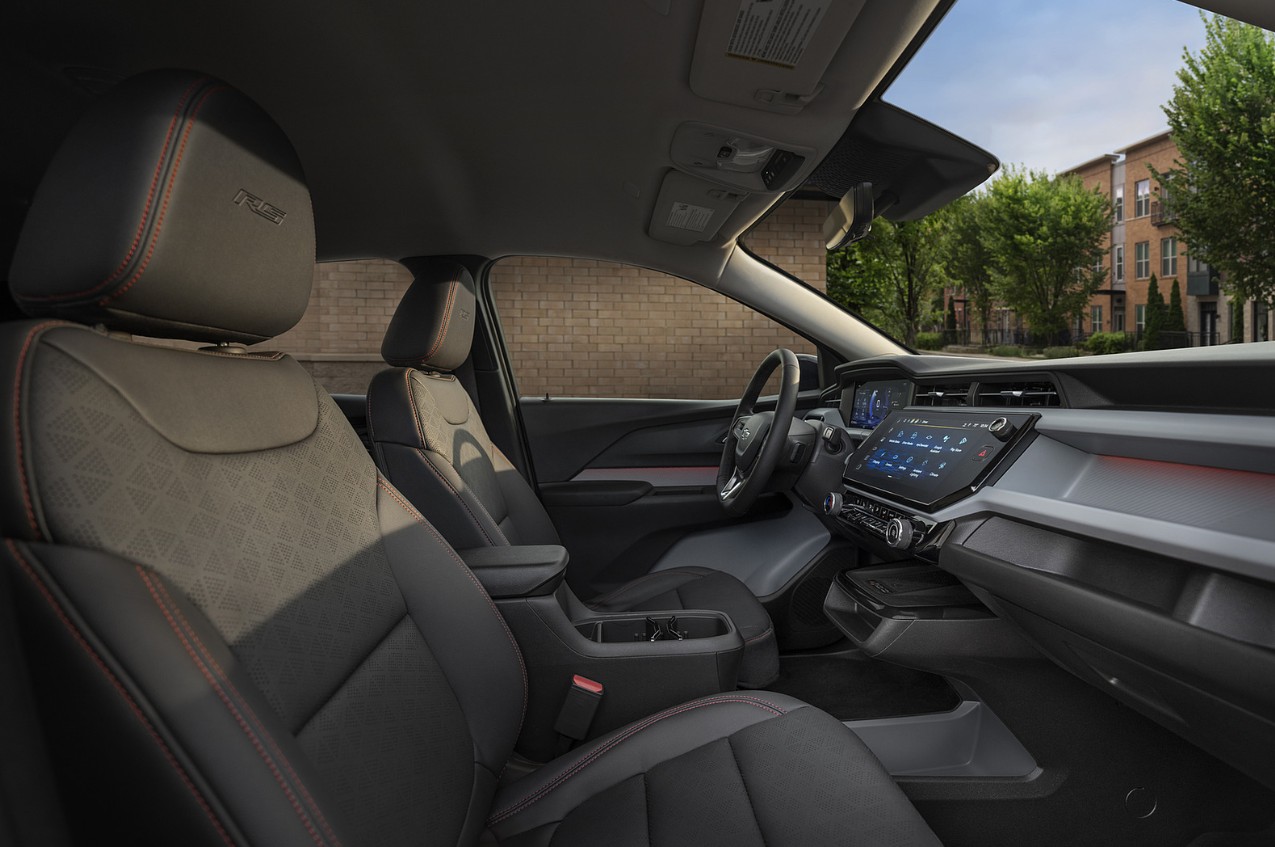
Inside, the difference from the old Bolt is much more substantial. Chevrolet describes the new cabin as redesigned, with an open center console, additional passenger-dash storage and larger displays. The 11.3-inch touchscreen is paired with an 11-inch driver display, creating a much more contemporary dashboard layout. Google built-in provides integrated navigation and entertainment functions, while multiple USB-C ports and available wireless phone charging improve everyday usability. These changes matter because affordable EV buyers increasingly expect the same digital conveniences found in vehicles costing tens of thousands of dollars more.
Practicality should remain a major Bolt strength in 2028. The current model seats five and provides approximately 16.2 cubic feet of cargo capacity behind the rear seats, expanding to roughly 56 cubic feet with the rear seats folded according to independent testing data. Rear-seat space is also competitive for a vehicle of this size, making the Bolt more useful as a primary household car than its low price might suggest. A future model could improve seat cushioning, storage compartments and material quality without sacrificing the upright seating position. The goal should be a cabin that feels durable and intelligently packaged rather than unnecessarily luxurious.
The 2027 Chevrolet Bolt already represents a substantial visual refresh rather than an all-new body. Chevrolet previewed updates to the front fascia, rear lighting and charging-port area before the full reveal, and the production vehicle carries a familiar silhouette that draws heavily from the practical proportions of the previous Bolt EUV. The objective was clearly to preserve the recognizable Bolt identity instead of forcing the model into the more dramatic styling language used by Chevrolet’s larger EVs. For a potential 2028 version, that means another full redesign would make little financial sense unless GM commits to a much longer production cycle.
A more realistic 2028 update would concentrate on software, connectivity and equipment. Chevrolet could introduce additional Google built-in functions, improve navigation and charging-route planning, expand over-the-air updates and refine the user interface. The current Bolt already uses an 11.3-inch central touchscreen and an 11-inch driver information display, giving it considerably more contemporary technology than the outgoing model. A future model could retain those screens while improving processing speed, graphics and smartphone integration. This approach would also help control manufacturing costs because the basic hardware would not need to be replaced.
Battery development would be another area worth watching. The current Bolt uses a 65-kWh lithium-iron-phosphate battery, and GM has specifically highlighted LFP’s cost advantages as part of the strategy behind the affordable EV. GM also says the battery and electric-drive system were engineered to maximize efficiency. A 2028 Bolt could potentially benefit from incremental improvements in cell chemistry or battery management, allowing Chevrolet to increase usable range without dramatically increasing battery size. An increase toward 275 or even 300 miles would be technically plausible, but there is no official Chevrolet confirmation of such a target. The safest expectation is continued optimization rather than a radical battery overhaul.
Charging technology could also receive attention if Chevrolet extends the Bolt beyond its limited-run 2027 production. The current car already represents a major improvement over the previous generation, supporting more than 150 kW of DC fast charging and an estimated 10-to-80-percent charging time of about 25 minutes. It also has a native NACS connector, eliminating the need for an adapter when using compatible Tesla Superchargers. For 2028, Chevrolet could focus on improving sustained charging performance, thermal management and route-planning software rather than simply increasing the peak number. A consistently strong charging curve would be more useful to owners than a headline peak rate that the battery can maintain only briefly.
2028 Chevrolet Bolt Specs
Engine & Performance
The 2028 Chevrolet Bolt is unlikely to need enormous horsepower to deliver an enjoyable driving experience. The current 2027 model uses a single electric motor driving the front wheels, producing 210 horsepower and 169 lb-ft of torque. That output is only modestly higher than the previous Bolt’s 200 horsepower, but the newer electric-drive hardware is more efficient. Chevrolet says the same 65-kWh battery capacity can deliver additional range because the new propulsion components consume less energy. For a lightweight compact EV, 210 horsepower is sufficient for responsive urban acceleration and confident highway merging without adding the expense and weight associated with a dual-motor system.
Independent testing gives a useful indication of how the current hardware performs. Car and Driver recorded 0-to-60 mph acceleration in 6.7 seconds for a 2027 Bolt RS, while the electronically limited top speed was measured at 95 mph. That makes the Bolt clearly quicker than many conventional economy cars, even though it is not intended to compete with performance EVs. The electric motor’s immediate response also makes low-speed driving feel effortless. For 2028, a modest software calibration update could sharpen accelerator response, but a major power increase would probably conflict with the Bolt’s emphasis on affordability and efficiency.
Regenerative braking will remain an important part of the driving experience. The current Bolt offers multiple regeneration settings, including a high setting capable of supporting one-pedal driving. Chevrolet’s decision to move away from the old steering-wheel regeneration paddle simplifies the controls but changes how experienced Bolt owners interact with the vehicle. A future 2028 version could refine the software to make regenerative braking smoother at parking-lot speeds while retaining stronger energy recovery during normal urban driving. Better calibration would be more valuable than simply increasing regenerative strength because predictable pedal response makes an EV easier to drive smoothly in traffic.
2028 Chevrolet Bolt Fuel Economy
Fuel economy is one area where the Bolt continues to make a strong case for itself. EPA data for the current model lists approximately 134 MPGe in city driving, 106 MPGe on the highway and 120 MPGe combined. The 65-kWh battery and 262-mile EPA range create a useful combination of efficiency and everyday usability. Independent testing has shown that real-world results can differ considerably from EPA estimates, especially during high-speed highway travel and in changing weather conditions. Car and Driver recorded 230 miles during its 75-mph highway range test, demonstrating why buyers should distinguish official ratings from real-world long-distance results.
2028 Chevrolet Bolt Safety Features
Safety technology could become one of the strongest reasons to continue the Bolt nameplate into 2028. Chevrolet already equips the current Bolt with more than 20 standard safety and driver-assistance features, including technologies such as intersection collision mitigation, rear automatic braking and rear cross-traffic alert with braking. Available Super Cruise adds hands-free driving capability on compatible roads, giving the Bolt access to technology that would traditionally be associated with considerably more expensive Chevrolet and Cadillac models. If the Bolt continues into 2028, additional camera and software improvements could expand the capability of these systems.
Super Cruise deserves particular attention because it changes the technology proposition of an inexpensive EV. Chevrolet currently describes the Bolt as the most affordable vehicle offering hands-free driving capability, although Super Cruise remains an available feature rather than standard equipment. A 2028 model could potentially receive newer software, expanded mapped-road coverage and improved lane-change behavior as GM develops its hands-free driving technology. Other expected equipment could include automatic emergency braking, pedestrian detection, lane-keeping assistance, blind-zone monitoring, rear parking assistance and forward collision alert. The driver remains responsible for the vehicle, but these systems can reduce workload during appropriate driving situations. 2028 Chevrolet Bolt Review
2028 Chevrolet Bolt Release Date & Price
The release date is the biggest uncertainty surrounding the 2028 Chevrolet Bolt. General Motors officially brought the Bolt back for the 2027 model year and described the return as a limited-run model. Chevrolet now lists the 2027 Bolt as available, but there has been no official announcement confirming a 2028 model year. That means an article about the 2028 Bolt should not present a launch date as established fact. If Chevrolet extends production, a conventional 2028 model-year transition could place vehicles in dealerships during the latter part of 2027 or during 2028, depending on manufacturing plans. For now, the continuation itself remains unconfirmed.
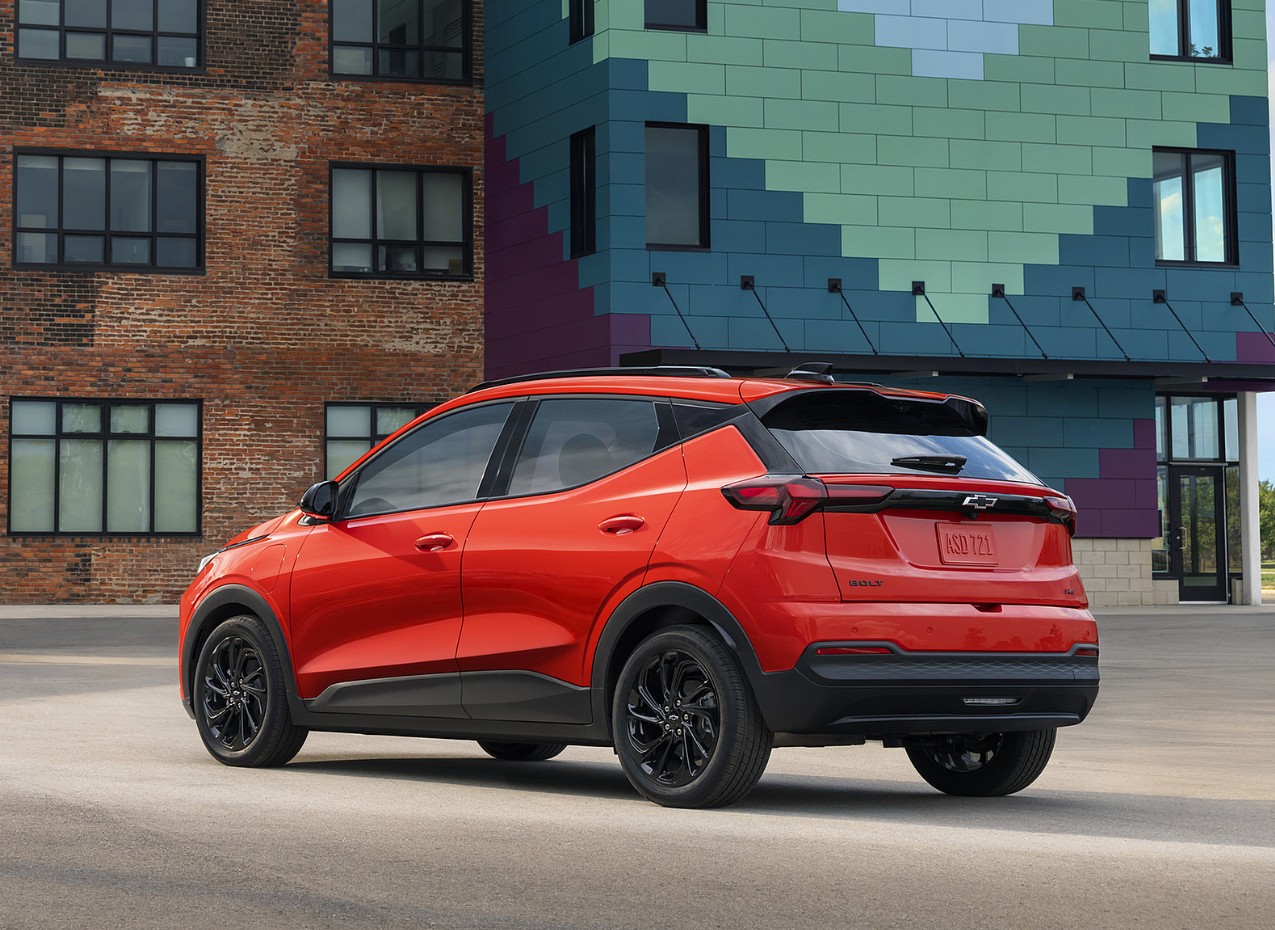
The trim structure should remain simple if Chevrolet decides to keep the Bolt affordable. The current lineup consists primarily of LT and RS, with both using the same 210-horsepower front-wheel-drive powertrain and 65-kWh battery. The LT focuses on value, while the RS adds visual upgrades such as black wheels, roof rails, RS badging, red interior stitching and multicolor ambient lighting. For 2028, Chevrolet could introduce a better-equipped LT package or add an optional technology package rather than creating numerous expensive grades. Keeping the lineup narrow would make production easier and preserve the Bolt’s core mission as an affordable EV.
Pricing is more difficult to predict because Chevrolet has not confirmed a 2028 Bolt. The current 2027 Bolt is officially positioned below $30,000, although Chevrolet’s website currently displays pricing that varies with destination and market configuration. Chevrolet has advertised the Bolt LT at $27,600 before applicable taxes, fees and optional equipment, while the RS is listed at $31,600. Earlier Chevrolet announcements cited $28,995 including destination for the lower-priced LT configuration. If a 2028 model arrives, modest inflation and equipment changes could place an LT around $29,000–$31,000 and an RS around $33,000–$36,000. These figures are projections, not confirmed Chevrolet pricing. 2028 Chevrolet Bolt Review
Conclusion
The 2028 Chevrolet Bolt could represent something increasingly valuable in the EV market: a vehicle that treats affordability as an engineering objective rather than simply stripping equipment from an expensive electric car. The reborn 2027 Bolt demonstrates that Chevrolet can combine a 65-kWh LFP battery, 210 horsepower, 262 miles of EPA-estimated range, 150-kW-plus DC fast charging, a native NACS connector, modern displays and available Super Cruise while keeping the entry price below the $30,000 mark.
Whether that formula reaches 2028 is still an open question. GM has characterized the current Bolt as a limited-run model, so a 2028 continuation is not guaranteed. If Chevrolet does extend the nameplate, the smartest strategy would likely be evolutionary rather than revolutionary: preserve the compact dimensions and efficient powertrain, improve software and charging behavior, add carefully selected comfort features and keep the price within reach of mainstream buyers.
A larger battery could eventually push range beyond the current 262-mile rating, while improved LFP chemistry and electric-drive efficiency could further reduce energy consumption. More sophisticated driver assistance, better infotainment software and additional charging-network integration could also make the Bolt increasingly convenient without fundamentally changing its identity.
The most interesting aspect of the potential 2028 model is therefore not whether it will become the fastest or longest-range Chevrolet EV. Its significance would come from maintaining a low entry price while making electric transportation easier to own. If Chevrolet can continue that balance, the Bolt could remain a compelling answer for commuters, small families and first-time EV buyers who want modern electric technology without moving into the much higher price brackets occupied by larger electric SUVs.